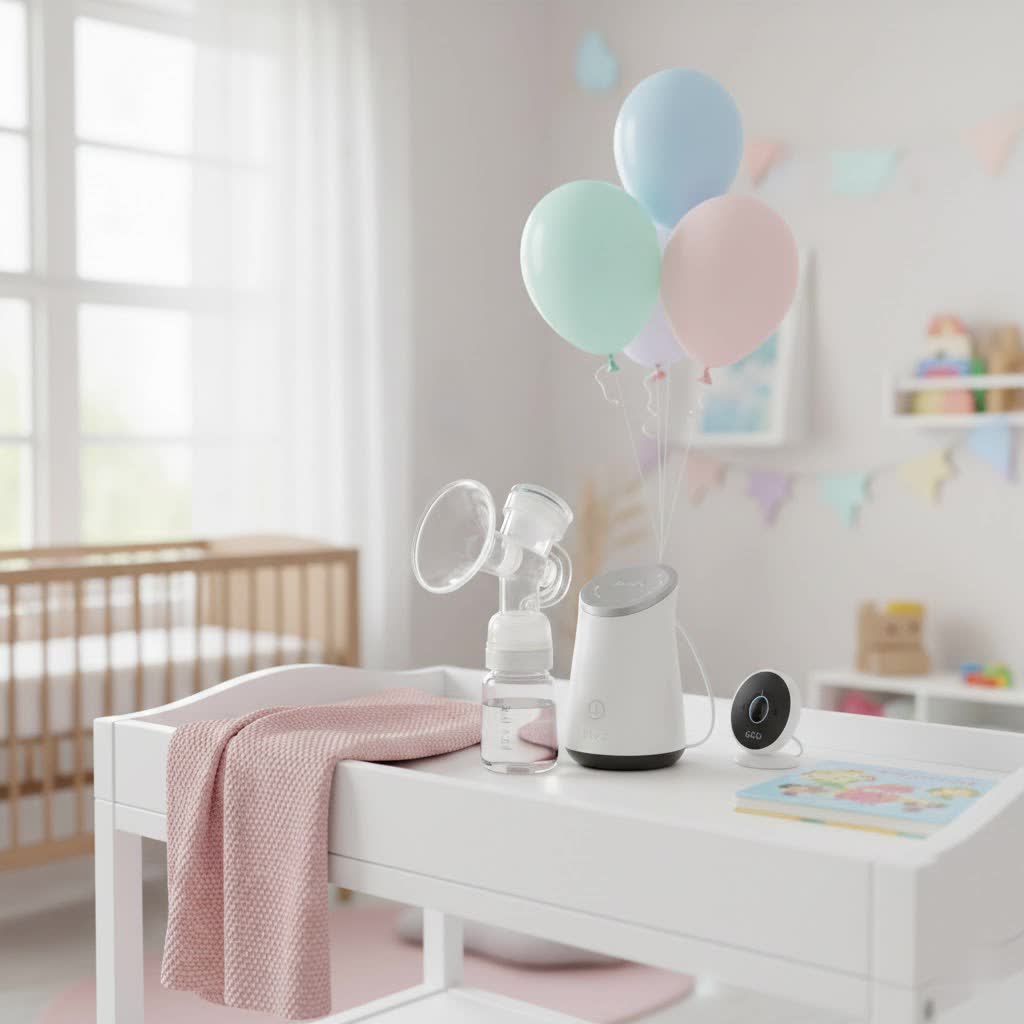
Modern motherhood is a dynamic journey, often requiring mothers to juggle multiple responsibilities while still prioritizing their baby’s nutrition. For many, the traditional breast pump, tethering them to a wall outlet, simply doesn’t fit this busy lifestyle. This is where the rechargeable breast pump steps in, offering unparalleled flexibility and convenience. Imagine expressing milk while commuting, working, or even tending to other children, all without the constraint of wires. This comprehensive guide will explore everything you need to know about rechargeable breast pumps, helping you find the perfect companion for your unique breastfeeding journey.
Understanding the Types of Rechargeable Breast Pumps
Rechargeable breast pumps offer the freedom of portability, but they come in different forms to suit varying needs and preferences. For see our breast pump recommendations on this site.
Portable Electric Pumps with Rechargeable Batteries
These pumps are essentially traditional electric breast pumps equipped with a built-in rechargeable battery. They still typically feature a main motor unit connected to breast shields via tubing, but the battery allows you to operate them without being plugged into a wall socket. This means you can move freely around the house or pump in a car, albeit with a visible setup. Many models offer strong suction comparable to their wired counterparts.
Wearable Breast Pumps (Hands-Free, In-Bra)
Representing the pinnacle of discreet pumping technology, wearable breast pumps are designed to fit directly inside your bra. Most are entirely wireless, with the motor integrated into the collection cups. Others might have a small, remote motor connected by very short tubing. These pumps allow for complete hands-free operation and are virtually invisible under clothing, making them ideal for pumping on the go, at work, or in public spaces.
The Undeniable Benefits of Rechargeable Breast Pumps
Choosing a rechargeable breast pump can significantly enhance your pumping experience, offering a host of advantages that cater to the demands of contemporary parenting.
- Unparalleled Portability and Freedom: The most significant benefit is the ability to pump anywhere. No longer are you confined to an electrical outlet; pump in your office, car, or even discreetly while out and about. This flexibility is a game-changer for working mothers or those with active lifestyles.
- Enhanced Discretion and Quiet Operation: Many rechargeable models, particularly wearable pumps, are designed to be remarkably quiet. This allows for more discreet pumping sessions, reducing self-consciousness in shared environments like an office or when pumping near a sleeping baby.
- Supports Consistent Milk Supply: Regular and timely milk expression is crucial for maintaining a healthy milk supply. The ease of use and portability of rechargeable pumps make it simpler to adhere to a consistent pumping schedule, even when away from home.
- Time-Saving and Multitasking: Hands-free wearable rechargeable pumps, in particular, free up your hands, allowing you to multitask during pumping sessions. You can work, read, eat, or care for your baby simultaneously, making efficient use of your time.
- Smart Features and Technology Integration: Many modern rechargeable pumps come with advanced features such as app connectivity for tracking sessions, automatic mode transitions (stimulation to expression), and customizable suction patterns, offering a more personalized and efficient pumping experience.
Key Considerations When Choosing Your Ideal Rechargeable Breast Pump
With a variety of options available, selecting the right rechargeable breast pump requires careful thought. Consider these factors to ensure your choice aligns with your individual needs.
- Pumping Needs and Lifestyle: Your pumping frequency and reasons for pumping are paramount. Are you an exclusive pumper who needs consistent, powerful suction multiple times a day? Or do you need a pump for occasional relief, to build a small stash, or for pumping while at work? Exclusive pumpers may prioritize maximum milk output, while those needing occasional pumping might value discretion and ultimate portability more.
- Battery Life and Charging Time: Check the advertised battery life, typically measured in hours or sessions per charge. Most offer 2-3 hours or 5-8 sessions. Also, consider the charging time. Ideally, a pump should charge relatively quickly and hold a charge long enough to get you through your daily pumping needs.
- Suction Strength and Effectiveness: While convenience is key, effective milk expression is the primary goal. Research indicates that some wearable pumps might offer slightly less suction than traditional wired pumps, potentially impacting milk output for some users, especially those working to establish supply. Look for pumps with adjustable suction levels and consider reviews regarding milk yield.
- Comfort and Flange Fit: Pumping should never be painful. Proper flange fit is critical for comfort and efficiency. Many pumps come with various flange sizes, and some brands offer specialized sizing tools. Don’t hesitate to consult a lactation consultant for help with sizing.
- Noise Level: If discretion is a priority, especially for pumping in public or shared spaces, a quiet pump is essential. Manufacturers often provide decibel ratings (dB); lower numbers indicate a quieter operation.
- Ease of Cleaning and Maintenance: Pumping involves regular cleaning and sterilization of parts. Consider how many components a pump has and how easy they are to disassemble, wash, and reassemble. Dishwasher-safe parts can be a huge time-saver.
- Budget and Insurance Coverage: Rechargeable breast pumps vary widely in price. Check with your insurance provider, as many plans cover or offer partial reimbursement for breast pumps, including some rechargeable models.
Comparing Wearable and Traditional Wired Breast Pumps
The decision often comes down to balancing raw power with ultimate freedom. Here’s a comparison to help clarify the differences:
| Feature | Wearable Rechargeable Breast Pumps | Traditional Wired Electric Breast Pumps (can be rechargeable) |
|---|---|---|
| Portability | Excellent (in-bra, discreet, fully mobile) | Good (with rechargeable battery, but often still a visible unit with tubing) |
| Discretion | High (fits inside bra, often very quiet) | Moderate (visible unit, tubing, can be noisy) |
| Suction Strength | Varies, can be slightly lower than traditional, but improving | Generally strong and consistent, often hospital-grade options |
| Milk Output | Can be comparable for some, but some users report slightly lower yield | Often considered the gold standard for maximizing output |
| Comfort | High (designed for in-bra fit, less tugging) | Can vary, may feel less natural, but proper flange fit is key |
| Cost | Often higher due to advanced technology | Generally more affordable, wider range of insurance-covered options |
| Ideal User | Mothers needing flexibility, discretion, multitasking, secondary pump | Exclusive pumpers, establishing supply, maximizing output, primary pump |
Top Rechargeable Breast Pumps on the Market
While personal preference and fit are paramount, certain rechargeable breast pumps consistently receive high praise for their performance and innovative features.
- Spectra S1 Plus: A highly popular portable electric pump known for its hospital-grade strength, comfortable suction, and quiet operation. Its built-in rechargeable battery makes it a favorite for mothers who need powerful pumping on the go.
- Elvie Pump / Elvie Stride: Leading wearable options, celebrated for their sleek design, ultra-quiet operation, and smart features. They offer significant freedom and discretion, though some users report slightly lower output compared to traditional pumps.
- Momcozy M5 / S12 Pro: These wearable pumps are praised for their affordability, comfortable fit, and decent suction, making them popular choices for mothers seeking hands-free convenience without a premium price tag.
- Willow Go: Another prominent wearable pump that offers impressive milk collection capacity and smart features, allowing for discreet and efficient pumping.
- Medela Swing Maxi: A compact and easy-to-use portable electric pump that provides strong suction and is often chosen for its reliability and durability. It offers hands-free pumping when paired with a pumping bra.
Essential Tips for Using and Maintaining Your Rechargeable Breast Pump
To get the most out of your rechargeable breast pump and ensure a safe, efficient experience, follow these practical tips.
- Ensure Proper Assembly and Flange Sizing: Always double-check that all pump parts are correctly assembled according to the manufacturer’s instructions. Crucially, verify your flange size. An incorrect fit can lead to pain, reduced milk output, and potential nipple damage.
- Optimize Pumping Settings and Techniques: Experiment with different suction levels and cycle speeds to find what works best for your body. Mimicking a baby’s natural suckling pattern (faster, lighter suction for letdown, then slower, deeper suction for expression) can be very effective.
- Regular Cleaning and Sterilization: Breast pump parts that come into contact with breast milk must be cleaned after each use and sterilized regularly. Use warm, soapy water and allow them to air dry completely. Refer to your pump’s manual for specific sterilization guidelines.
- Prioritize Battery Care and Charging Habits: To prolong battery life, avoid fully discharging your pump before recharging. Aim to charge it after a few sessions or overnight, so it’s always ready when you need it.
- Troubleshooting Common Issues: If you experience low suction, pain, or milk leakage, refer to your pump’s manual for troubleshooting steps. Common causes include incorrect assembly, worn-out parts (like membranes or valves), or improper flange size. Don’t hesitate to consult a lactation consultant if problems persist.
Where to Purchase Your Rechargeable Breast Pump
Finding a reliable source for your breast pump is as important as choosing the right model.
- Online Retailers: Major online platforms offer a vast selection of rechargeable breast pumps, often with competitive pricing and detailed customer reviews.
- Specialty Baby Stores: These stores provide the advantage of hands-on experience, allowing you to see and feel different models, and often have knowledgeable staff who can offer personalized advice.
- Through Insurance Providers: Many insurance plans cover the cost of a breast pump. Contact your provider or a medical supply company that works with insurance to understand your options and obtain a pump, potentially at no out-of-pocket cost.
Conclusion
Rechargeable breast pumps have revolutionized the pumping experience, offering modern mothers the freedom and flexibility to nourish their babies without being tethered to a wall. Whether you opt for a portable electric pump with a reliable battery or a discreet, hands-free wearable model, the ability to pump on your own terms can significantly reduce stress and help maintain your milk supply. By carefully considering your lifestyle, needs, and the key features discussed, you can confidently choose a rechargeable breast pump that truly empowers your breastfeeding journey. What aspects of portable pumping freedom are most important to you?
Frequently Asked Questions
Are wearable rechargeable pumps as effective as traditional ones?
|
Our Picks for the Best Breast Pump in 2026
As an Amazon Associate I earn from qualifying purchases.
|
||
| Num | Product | Action |
|---|---|---|
| 1 | Momcozy Wearable Breast Pump, Hands Free Upgraded Mobile Flow - M9, App Discreet Control with Personalized Multi-Modes & 15 Levels, Wearable Breast Pump 24mm, 2 Pack Cozy Red |

|
| 2 | Momcozy M5 Smart APP Controlled Wearable Breast Pump, Hands-Free Wireless Electric Pump, 3 Modes 9 Suction Levels, BPA-Free, Portable Lightweight, 24mm Flange, 2-Pack Cozy Red |
|
| 3 | Momcozy M5 Smart APP Controlled Wearable Breast Pump, Hands-Free Wireless Electric Pump, 3 Modes 9 Suction Levels, BPA-Free, Portable Lightweight, 24mm Flange, 2-Pack Quill Gray |
|
| 4 | Hands Free Breast Pump Wearable MY-375 - Strong Suction, Low Noise, Wearable Breastfeeding Pump with 4 Mode &12 Levels, Portable Electric Breast Pump 24mm - 19/21/Insert/Flange, 2 Pack (White) |
|
| 5 | Momcozy M5 Lite Hands-Free Wearable Breast Pump, DoubleFit Flange for Baby-Like Comfort, 3 Modes & 9 Suction Levels, No Flange Insert or Hard Carry Case, 24mm, 2-Pack, Cozy Red |
|
| 6 | Paruu Hands Free Breast Pump P16, Wearable Breast Pump Electirc Portable with 4 Modes & 12 Levels, Max 309mmHg Strong Suction 19/21/24mm Flange Inserts Wearable Breastfeeding Pump, 2 Pack(Nude |
|
| 7 | Momcozy Breast Pump V1 Pro Hospital-Grade, Hands-Free & Portable Wearable Pump, Upgraded Electric Pump with 3 Fine-Tuned Rhythms-15 Levels, Come with Leak-Proof DoubleFit Flange, Cozy Red. |
|
| 8 | NCVI Electric Breast Pump 8782, Portable Hospital-Grade Double Pump with 4 Modes & 9 Levels, Anti-Backflow, Rechargeable Quiet Breastfeeding Pump for Efficient Comfortable Use at Home, Work or Travel |
|
| 9 | Lulia Double Electric Breast Pump, Breastfeeding Pump 4 Modes & 9 Levels, Low Noise, Anti-Backflow & LED Display, BPA Free, Portable Breast Pumps with 24mm Flange |
|
| 10 | Hands Free Breast Pump, Wearable Breastfeeding Pump with 4 Mode & 9 Level, Strong Suction, Painless, Anti-Backflow, BPA Free, Portable Electric Breast Pumps with 17/19/21/24MM Flanges |
|
While some users, particularly those with established supply, find wearable pumps equally effective, others report slightly lower milk output compared to powerful traditional electric pumps. Their compact design prioritizes discretion and mobility, which can sometimes come with a trade-off in raw suction power. For establishing supply or exclusive pumping, many lactation experts recommend a hospital-grade or traditional electric pump, potentially supplemented by a wearable pump for convenience.
How long does a rechargeable breast pump battery last?
Battery life varies by model and usage, but most rechargeable breast pumps offer approximately 2 to 3 hours of continuous pumping or enough power for 5 to 8 pumping sessions on a single charge. Charging times also differ, so it’s wise to check the manufacturer’s specifications.
Can I exclusively pump with a wearable rechargeable breast pump?
While it is possible, many lactation consultants suggest caution, especially when establishing your milk supply. Some mothers find that wearable pumps do not fully empty the breast, which can potentially lead to a decrease in supply over time if used as the sole pumping method. They are often highly recommended as a convenient secondary pump for mothers who primarily breastfeed or use a more powerful primary pump.
How often should I clean my rechargeable breast pump?
All parts of your breast pump that come into contact with breast milk should be cleaned after each pumping session. This typically involves washing them with warm, soapy water and allowing them to air dry. Sterilization, often by boiling or using a steam sterilizer, is generally recommended once a day for optimal hygiene, especially for newborns or premature infants. Always consult your pump’s user manual for specific cleaning and sterilization instructions.
Are rechargeable breast pumps covered by insurance?
Many health insurance plans in the United States cover breast pumps under the Affordable Care Act. This often includes electric breast pumps, and some plans may cover specific rechargeable or even wearable models. It’s essential to contact your insurance provider directly or use a medical supply company that specializes in breast pump insurance claims to determine your exact coverage and available options.
Get our weekly buyer guide
Practical specs, not advice. Unsubscribe anytime.
